
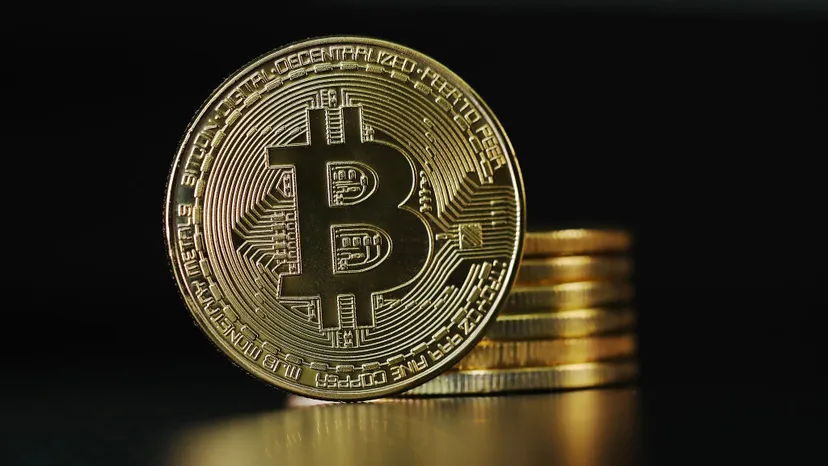
Introduction: A New Definition of Money
Once upon a time, money was gold coins tucked away in hidden vaults or paper notes slipped discreetly into wallets. Today, we stand at the frontier of an entirely new monetary landscape—one built not on metal or paper, but on lines of cryptographic code. Bitcoin, the first and most recognized cryptocurrency, did not simply appear; it erupted into existence during the global financial crisis of 2008, offering a daring antidote to the failures of traditional banking. Its origins are wrapped in mystery, but its impact has become impossible to ignore.
Bitcoin’s journey from a fringe experiment to a trillion-dollar asset class is not merely a story about technology—it is a reflection of shifting trust, economic anxiety, and a hunger for alternatives. To understand Bitcoin is to grasp a piece of the larger puzzle of how money, power, and freedom may be reshaped for future generations.
The Genesis: A Response to Broken Systems
Satoshi Nakamoto’s whitepaper, Bitcoin: A Peer-to-Peer Electronic Cash System, landed like a manifesto at the height of global financial distrust. In a world where governments bailed out banks yet failed ordinary savers, Bitcoin promised something audacious—a currency not reliant on banks, regulators, or any central authority. Instead, it offered the world a system where transactions were verified by math and maintained by a decentralized network of computers.
This radical departure from centuries of centralized banking unleashed a new breed of digital money: borderless, censorship-resistant, and deflationary by design. Where fiat currency can be printed endlessly, Bitcoin’s supply will forever be capped at 21 million coins—a nod to scarcity that echoes precious metals more than paper dollars.
How Bitcoin Works: The Blockchain Revolution
Underpinning Bitcoin is blockchain technology—a distributed digital ledger that records every transaction ever made. This ledger is not hidden away in a single vault or server; it exists simultaneously across thousands of computers worldwide, each validating and storing the same records.
The pillars of Bitcoin’s design include:
-
Decentralization: No single point of failure, no central bank to manipulate supply, and no bureaucracy to obstruct transactions.
-
Proof of Work: Bitcoin miners expend computational power to solve complex mathematical puzzles. This process secures the network, verifies transactions, and issues new bitcoins.
-
Transparency: Every transaction is publicly recorded and can be verified by anyone, yet individual identities remain pseudonymous.
-
Immutability: Once recorded, transactions cannot be altered or reversed, ensuring a permanent and tamper-proof record.
This elegant architecture makes fraud and double-spending virtually impossible, replacing the need for human trust with the certainty of cryptography.
Why Bitcoin Appeals: Modern Gold or Passing Fad?
Bitcoin’s allure is multi-faceted. For some, it is digital gold—a hedge against inflation in an age when central banks expand the money supply seemingly without end. For others, it is an instrument of financial freedom, granting individuals control over their wealth in places where local currencies falter or governments impose tight capital controls.
Key reasons why people gravitate towards Bitcoin include:
-
Limited Supply: A fixed cap means no government or central bank can dilute its value by printing more.
-
Borderless Nature: Whether in London, Lagos, or Lima, anyone with an internet connection can send or receive bitcoin.
-
Sovereignty: Bitcoin grants holders full custody of their assets, eliminating reliance on fragile banks or restrictive regulations.
-
Innovation: For technology enthusiasts, Bitcoin represents a gateway to a broader revolution of decentralized finance and digital ownership.
The Double-Edged Sword: Volatility and Speculation
For all its promise, Bitcoin is no stranger to controversy. Its dramatic price swings can turn early investors into overnight millionaires—or wipe out fortunes just as quickly. This volatility has attracted waves of speculators, creating an atmosphere where Bitcoin sometimes feels more like a high-risk asset than a stable currency.
Critics argue this price unpredictability undermines its use as a reliable medium of exchange. Why spend bitcoin on coffee today if that same amount might buy you a car tomorrow? Yet defenders counter that volatility is natural for an asset class still in its adolescence. Many believe Bitcoin will stabilize as adoption grows and market maturity tempers the wild swings.
The Environmental Question: A Challenge for the Future
No discussion of Bitcoin is complete without addressing its environmental footprint. The mining process, which underpins Bitcoin’s security, demands immense computational power and, consequently, vast amounts of electricity. Some studies have compared Bitcoin’s energy use to that of entire nations, sparking fierce debates about sustainability.
Proponents argue that mining operations are increasingly moving towards renewable energy sources and that innovation in energy efficiency is part of the industry’s future. Critics remain unconvinced, warning that unchecked growth could exacerbate climate concerns. The environmental impact of Bitcoin mining is a crucial battleground for its long-term legitimacy.
Regulation: Embrace or Suppress?
Governments worldwide are still grappling with how to classify and control Bitcoin. In some countries, it is welcomed as an innovation with economic potential. El Salvador famously made Bitcoin legal tender, hoping to attract investment and offer financial services to the unbanked. In others, like China, it is seen as a threat to monetary control and is outright banned.
Meanwhile, established economies are rolling out complex frameworks to balance innovation with consumer protection and financial stability. The rise of central bank digital currencies (CBDCs) is in part a response to Bitcoin’s popularity—a sign that the original cryptocurrency has forced even the most traditional institutions to rethink the future of money.
The Institutional Embrace: From Fringe to Finance
Once dismissed by Wall Street, Bitcoin now sits on the balance sheets of public companies and institutional funds. Major asset managers, payment processors, and even traditional banks are dipping their toes into crypto markets, driven by customer demand and the fear of being left behind.
Large players like Tesla, MicroStrategy, and Square have made headlines with massive Bitcoin acquisitions. Payment giants like PayPal and Visa now allow millions of users to transact in crypto with relative ease. This mainstream acceptance fuels legitimacy but also invites new forms of oversight and taxation.
A Glimpse Ahead: What’s Next for Bitcoin?
What does the future hold for Bitcoin? Predictions range wildly—from dystopian fears of harsh crackdowns to utopian dreams of a truly decentralized global currency. As layer-two solutions like the Lightning Network improve Bitcoin’s scalability, and as regulatory clarity emerges, Bitcoin’s role in everyday commerce could expand beyond mere investment speculation.
Regardless of its ultimate trajectory, Bitcoin has already achieved something profound: it has forced the world to reconsider what money is, who should control it, and how much trust should rest with institutions versus open-source code.
Final Reflection: A Monetary Revolution in Motion
Bitcoin is not just a financial instrument; it is an idea. An idea that money can be free of political manipulation, that financial systems can be transparent yet secure, and that individuals can reclaim control over their wealth in a hyperconnected world.
Its future is unwritten, but its legacy is secure. Bitcoin has seeded a quiet revolution—one that continues to ripple through economies, boardrooms, and households alike. In an age when the nature of trust itself is being redefined, Bitcoin stands as both a symbol and a tool for a new era of money. Whether that promise is fulfilled remains in our collective hands.