
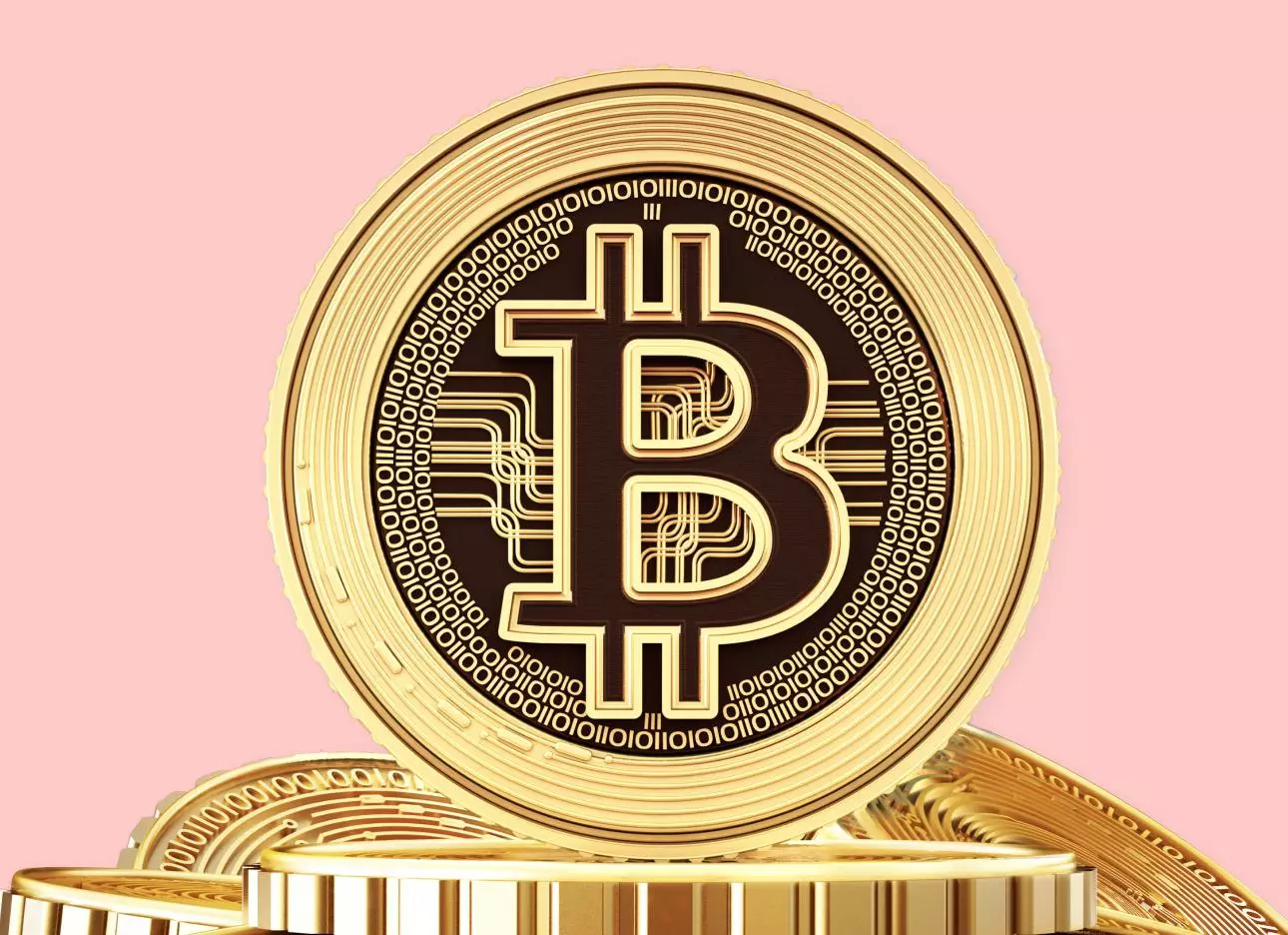
A Currency Born from Crisis
In the early days of 2009, while much of the world was still reeling from the aftershocks of a devastating financial crisis, a curious idea surfaced on the fringes of the internet. An anonymous figure, known only as Satoshi Nakamoto, released a whitepaper that would come to redefine how many think about money, trust, and sovereignty. Bitcoin, Nakamoto’s invention, was not merely another digital experiment. It was a bold statement—a direct response to the vulnerabilities exposed by reckless banking, opaque institutions, and the unchecked printing of fiat currency.
More than a decade later, Bitcoin has grown from an obscure notion debated by cryptographers to a trillion-dollar asset debated by governments, economists, and everyday savers alike. Its rise represents something profound: a technology-driven reimagining of wealth itself.
Understanding the Backbone: Blockchain Explained
At the heart of Bitcoin lies the blockchain—a term often used but seldom fully understood by the casual observer. Simply put, blockchain is a decentralized digital ledger that records every transaction ever made with Bitcoin. But what sets it apart is that this ledger is distributed across thousands of computers worldwide, each validating every transaction independently.
Why is this so revolutionary?
-
Transparency: Anyone can inspect the blockchain and verify transactions.
-
Security: Once recorded, transactions cannot be altered or erased, ensuring an immutable history.
-
Decentralization: No single authority, government, or corporation controls the network. It is maintained by a global community of miners and nodes.
-
Trust by Mathematics: Instead of relying on a trusted intermediary like a bank, Bitcoin uses cryptography to secure value exchange.
Through this mechanism, Bitcoin offers something the traditional financial system cannot: a monetary system that runs on code, not human discretion.
Bitcoin’s Value Proposition: Digital Gold or Fool’s Gold?
What makes Bitcoin valuable? It’s not backed by gold bars in a vault or government decree. Instead, its worth stems from collective belief and specific technical properties. Chief among these is scarcity. Unlike fiat currencies, which can be printed infinitely, Bitcoin’s supply is mathematically capped at 21 million coins—a design decision that mirrors the finite nature of precious metals.
Supporters see Bitcoin as:
-
A Store of Value: Like gold, Bitcoin can act as a hedge against inflation and currency devaluation.
-
A Decentralized Alternative: It removes reliance on banks, offering individuals full control of their wealth.
-
A Borderless Network: Bitcoin knows no borders; it can be sent from one corner of the world to another without intermediaries.
-
A Hedge Against Uncertainty: In regions with unstable governments or rampant inflation, Bitcoin often serves as an escape hatch for protecting savings.
To its critics, however, Bitcoin is speculative mania—a volatile asset driven more by hype than by fundamentals. Its price swings can be wild, and fortunes have been both made and lost in dramatic fashion. Yet its resilience through multiple boom-and-bust cycles suggests an underlying robustness that continues to draw believers back in.
Mining: The Engine and Its Environmental Cost
If Bitcoin is digital gold, mining is quite literally how new “gold” enters circulation. Bitcoin miners use powerful computers to solve complex mathematical puzzles. This process, known as Proof of Work, secures the network and verifies transactions. In return, miners receive freshly minted bitcoins as a reward.
The catch? This process consumes vast amounts of electricity. Critics argue that Bitcoin’s carbon footprint rivals that of entire nations. Proponents counter that much of the mining industry is increasingly powered by renewable energy and that the process incentivizes innovation in clean power. The debate is ongoing, but one thing is clear: energy consumption will remain one of Bitcoin’s defining challenges in the years ahead.
The Regulatory Tug-of-War
As Bitcoin’s market capitalization soared, it inevitably caught the attention of governments worldwide. Some nations, such as El Salvador, have embraced Bitcoin as legal tender—a radical experiment in financial independence. Others, like China, have cracked down on mining and trading, citing risks to financial stability and capital controls.
In developed economies, regulators are treading a delicate line. There is recognition that Bitcoin and its underlying technology can foster innovation and efficiency. Yet there is also concern about its use for illicit transactions, tax evasion, and its disruptive impact on established monetary policy.
Central banks, in response, have accelerated their exploration of Central Bank Digital Currencies (CBDCs)—state-backed digital coins that aim to combine the benefits of blockchain with the trust of traditional currency. Whether CBDCs coexist with Bitcoin or attempt to replace its appeal remains to be seen.
From Fringe to Wall Street: Institutional Adoption
For years, Bitcoin was dismissed as the playground of hobbyists, hackers, and black-market traders. That perception has shifted dramatically. Major corporations such as Tesla, Square, and MicroStrategy have added Bitcoin to their balance sheets. Payment platforms like PayPal now allow users to buy, sell, and spend Bitcoin alongside dollars and euros.
Big banks and hedge funds that once scoffed now scramble to offer crypto products to clients, fearing irrelevance if they do not adapt. Bitcoin-backed exchange-traded funds (ETFs) have arrived in some markets, opening the door for traditional investors to gain exposure without directly holding digital coins.
This slow but steady institutional embrace has given Bitcoin newfound legitimacy—and a robust layer of price support.
The Road Ahead: Promise and Peril
Bitcoin’s future is anything but guaranteed. It faces existential questions. Will it scale to serve as a true currency for everyday purchases, or will it remain primarily a speculative store of value? Will governments tolerate a parallel monetary system they cannot fully control? Will technological improvements, such as the Lightning Network, solve Bitcoin’s speed and cost limitations for small transactions?
Equally important is the cultural and philosophical dimension. Bitcoin’s story is as much about ideology as it is about code. For millions around the world, it symbolizes freedom from capital controls, protection from runaway inflation, and the promise of financial self-determination.
Final Thoughts: Bitcoin as a Mirror
Bitcoin is not merely a new form of money—it is a mirror held up to the weaknesses and inequities of the systems it seeks to challenge. Its invention has sparked debates about what money truly is, who should control it, and how technology can reshape trust itself.
Whether Bitcoin ultimately transforms global finance or simply forces existing systems to evolve, its impact is already undeniable. It has inspired a new generation of thinkers, builders, and investors to imagine a world where value flows as freely as information. In that sense, Bitcoin is more than an asset—it is a quiet revolution, still unfolding, block by block.