
Introduction
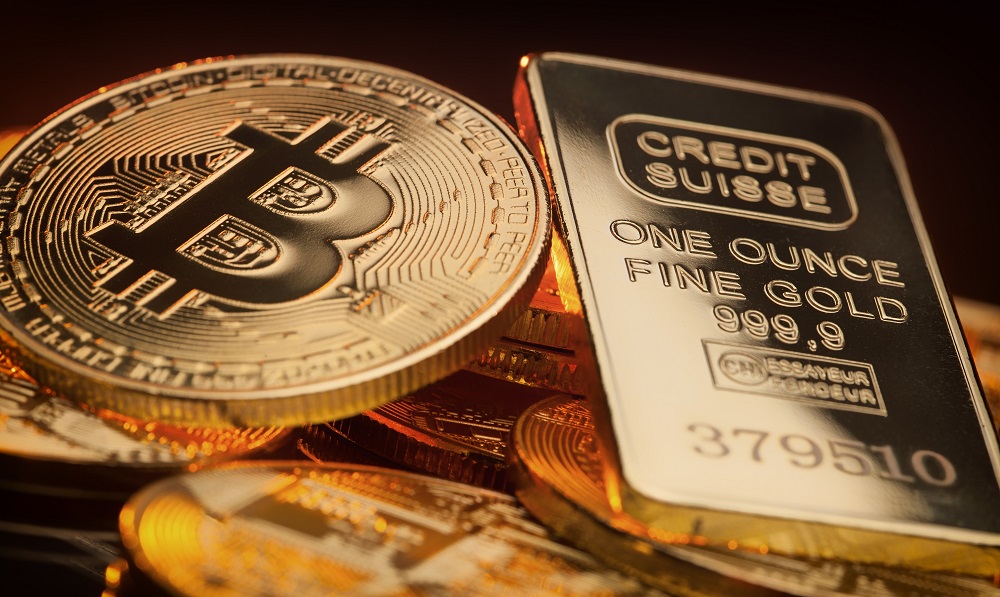
For centuries, gold has symbolized wealth, security, and financial stability. In the digital era, a new asset has emerged with similar characteristics—Bitcoin. Often referred to as digital gold, Bitcoin is increasingly viewed as a store of value designed for a world driven by technology and global connectivity.
This article explores why Bitcoin is compared to gold, how it differs, and whether it truly deserves the title of the new digital gold.
What Makes Gold Valuable?
To understand the comparison, it’s essential to examine why gold has maintained value for thousands of years.
Gold’s key characteristics include:
-
Scarcity – Limited natural supply
-
Durability – Does not corrode or degrade
-
Divisibility – Can be melted and reformed
-
Portability – Easily transported in physical form
-
Universal acceptance – Recognized globally
Gold has historically acted as:
-
A hedge against inflation
-
A safe-haven asset during crises
-
A long-term store of value
Bitcoin mirrors many of these properties—digitally.
Why Bitcoin Is Called Digital Gold
Bitcoin shares several foundational traits with gold but adapts them for a digital economy.
1. Programmed Scarcity
Unlike fiat currencies that governments can print, Bitcoin has a fixed supply cap of 21 million coins. This scarcity is enforced by code, making it resistant to inflationary manipulation.
Gold is scarce because of nature. Bitcoin is scarce because of mathematics.
2. Decentralization
Gold exists independently of governments. Similarly, Bitcoin operates on a decentralized blockchain network, meaning no central authority controls it. Transactions are verified by a global network of participants rather than a single institution.
3. Portability in the Digital Age
Transporting large amounts of gold is costly and risky. Bitcoin, on the other hand, can be transferred globally within minutes, regardless of borders.
This digital portability gives Bitcoin a significant advantage in a connected financial system.
4. Divisibility
Gold can be divided, but only with effort. Bitcoin is divisible down to one hundred millionth of a coin (a satoshi), allowing precise transactions of any size.
5. Transparency and Security
Bitcoin transactions are recorded on a public ledger. The blockchain ensures:
-
Immutable records
-
Cryptographic security
-
Transparent transaction history
Gold relies on physical verification. Bitcoin relies on cryptographic proof.
Key Differences Between Bitcoin and Gold
Despite similarities, important distinctions remain.
Physical vs. Digital
-
Gold is tangible and has industrial uses.
-
Bitcoin exists purely in digital form and relies on internet infrastructure.
Volatility
Gold has relatively stable long-term price movements. Bitcoin, while maturing, remains more volatile due to:
-
Market speculation
-
Regulatory developments
-
Adoption cycles
Historical Track Record
Gold has thousands of years of monetary history. Bitcoin, created in 2009, has just over a decade of performance data. While its growth has been significant, its long-term resilience is still being tested.
Bitcoin as a Hedge Against Inflation
In times of aggressive monetary expansion, investors often turn to scarce assets. Bitcoin’s fixed supply has made it attractive to those concerned about:
-
Currency debasement
-
Expanding national debt
-
Declining purchasing power
Unlike fiat currencies, Bitcoin’s issuance schedule is predictable and transparent. This predictability strengthens its narrative as a modern hedge.
Institutional Adoption and Mainstream Recognition
Over the past few years, Bitcoin has transitioned from a niche digital experiment to a recognized financial asset. Developments include:
-
Institutional investment funds allocating capital to Bitcoin
-
Public companies adding Bitcoin to their balance sheets
-
Growing regulatory clarity in multiple jurisdictions
This institutional interest reinforces its position as a legitimate store of value.
Risks and Challenges
While promising, Bitcoin carries notable risks:
-
Regulatory uncertainty in some countries
-
Cybersecurity threats related to exchanges or personal storage
-
Market volatility driven by speculation
-
Energy consumption concerns tied to mining
Investors should approach Bitcoin with a long-term perspective and a clear understanding of these risks.
Is Bitcoin Truly the New Gold?
Bitcoin does not replace gold—it complements it. Both assets serve as alternatives to traditional fiat systems but cater to different investor preferences.
Gold appeals to those who value physical assets with millennia of trust. Bitcoin attracts individuals seeking a decentralized, borderless, digitally native store of value.
Whether Bitcoin ultimately surpasses gold in global adoption remains uncertain. However, its core characteristics—scarcity, decentralization, portability, and transparency—strongly support the digital gold narrative.
Conclusion
Bitcoin represents a fundamental shift in how value can be stored and transferred in the modern world. By combining scarcity with advanced cryptography and global accessibility, it offers an alternative to traditional stores of wealth.
While still evolving, Bitcoin’s emergence as digital gold reflects a broader transformation in finance—one that blends technology with economic principles that have endured for centuries.
Frequently Asked Questions (FAQ)
1. Why is Bitcoin compared to gold instead of traditional currencies?
Bitcoin is compared to gold because of its scarcity, decentralization, and store-of-value properties. Traditional currencies are inflationary and centrally controlled, whereas Bitcoin is limited in supply and operates independently of governments.
2. Can Bitcoin completely replace gold in the future?
It is unlikely to fully replace gold. Instead, both assets may coexist, serving different roles in diversified portfolios.
3. Is Bitcoin safer than gold?
Safety depends on context. Gold carries physical storage risks, while Bitcoin carries digital security and regulatory risks. Proper storage solutions are critical for both.
4. How does Bitcoin mining compare to gold mining?
Gold mining extracts a physical resource from the earth. Bitcoin mining secures the blockchain network and introduces new coins according to a fixed issuance schedule.
5. Does Bitcoin have intrinsic value?
Bitcoin’s value comes from its network security, scarcity, utility as a transfer mechanism, and market demand rather than physical properties.
6. Why is Bitcoin more volatile than gold?
Bitcoin is still in a growth and adoption phase. Smaller market size and speculative trading contribute to larger price fluctuations compared to gold.
7. How can investors store Bitcoin securely?
Bitcoin can be stored in hardware wallets, software wallets, or through custodial services. Hardware wallets are often considered one of the safest long-term storage options.